
Warm weather can be enjoyable, but high temperatures can also be dangerous—especially for older adults. As we age, our bodies become less efficient at cooling down, making seniors more vulnerable to heat exhaustion and heat stroke, two serious heat-related illnesses. The good news? With a few simple precautions, heat stroke is largely preventable.
This guide explains how to stay safe, what signs and symptoms to watch for, and what to do in an emergency.
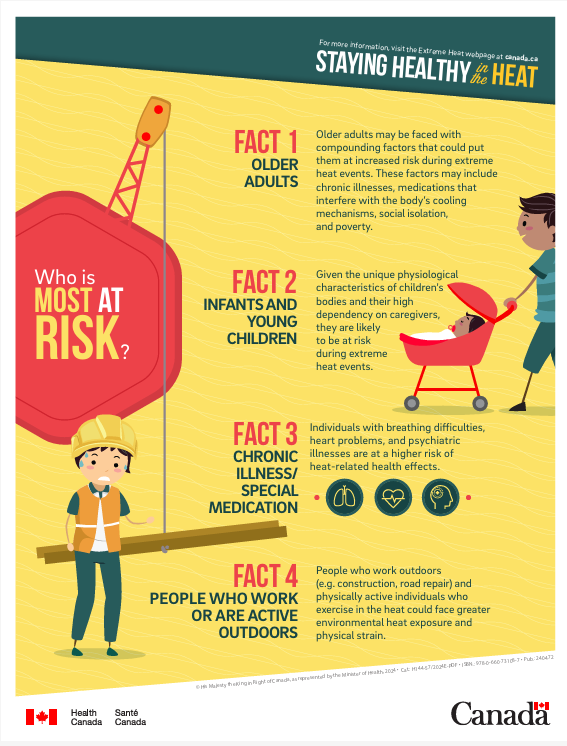
Why Seniors Are at Higher Risk
Several factors make older adults more sensitive to heat:
- The body’s ability to regulate temperature decreases with age
- Certain medications (like diuretics, blood pressure meds, antihistamines) can increase dehydration
- Chronic conditions such as heart disease or diabetes may affect heat tolerance
- Seniors don’t feel thirsty as strongly, leading to accidental dehydration
Because of these factors, it’s especially important to take hot weather seriously.
What Is Heat Stroke?
Heat stroke is the most dangerous heat-related illness. It happens when the body’s temperature rises to 104°F (40°C) or higher and can no longer cool itself. Heat stroke is a medical emergency and requires immediate treatment.
Early Warning Signs: Heat Exhaustion
Heat exhaustion can lead to heat stroke if not treated quickly. Watch for these early symptoms:
- Heavy sweating
- Weakness or dizziness
- Headache
- Nausea or vomiting
- Muscle cramps
- Pale or clammy skin
- Fast, weak pulse
- Feeling faint or tired
If you notice these signs, act immediately (see “What to Do” below).
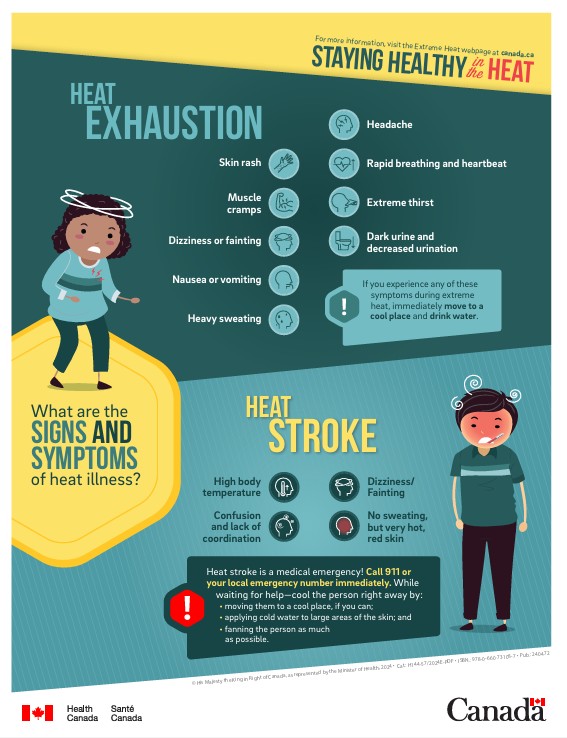
Heat Stroke: Signs and Symptoms
Heat stroke symptoms can appear suddenly. They include:
- Very high body temperature (hot, dry skin or no sweating)
- Strong, rapid pulse
- Confusion, agitation, or disorientation
- Slurred speech
- Seizures or loss of consciousness
- Flushed, dry skin
If these symptoms appear, call 911 emergency services right away.
How Seniors Can Prevent Heat Stroke
- Stay Hydrated
- Drink water regularly, even if you don’t feel thirsty.
- Avoid caffeine and alcohol—they can cause dehydration.
- Keep a bottle of water with you throughout the day to keep sipping on.
- Keep Cool Indoors
- Use fans or air conditioning.
- Close curtains or blinds during the hottest part of the day.
- Take cool showers or baths if you feel overheated.
If you don’t have AC, consider visiting a library, senior center, or cooling shelter.
For Seniors, you may be eligible for a free AC through the government. Call BC Hydro at 1-800-224-9376 for more information.
- Dress Smart
- Wear lightweight, loose-fitting clothing.
- Choose light-colored fabrics that reflect heat.
- Use a wide-brimmed hat when outdoors.
- Avoid the Hottest Hours
- Plan errands, walks, and outdoor activities for early morning or late evening. Midday heat (10 AM–4 PM) is the most dangerous.
- Check Medications
- Talk to your healthcare provider about how your medications might affect heat tolerance.
- Use the Buddy System
- Stay in touch with a friend, family member, or neighbor during heatwaves. A quick check-in can save a life.
What to Do if You Suspect Heat Exhaustion or Heat Stroke
Call 811 for additional information
If someone shows signs of heat exhaustion:
- Move them to a cool, shaded place. Use a fan
- Have them sip water slowly.
- Loosen clothing and apply cool, wet cloths to the skin; especially on the neck, face, armpits and back
- Rest until all symptoms improve.
If symptoms worsen or don’t improve within 30 minutes, seek medical help.
If you suspect heat stroke (emergency):
- Call 911 emergency services immediately.
- Move the person to a cooler area.
- Use a fan
- Apply cool cloths, ice packs (neck, armpits, groin)
- Do not give fluids if the person is unconscious or confused.
Heat stroke can be life-threatening—quick action matters.
Stay Safe and Enjoy the Summer
With awareness and preparation, seniors can enjoy warm weather safely. Pay attention to your body, stay hydrated, and seek help at the first sign of trouble. Remember: heat stroke can progress quickly, but it is fully preventable with the right precautions.
Disclaimer: This information was prepared from the most recent evidence-based research available at publication. It does not replace medical advice.
 English (Canada)
  日本語
日本語